

Difference Between Dating and a Relationship: What Actually Separates the Two
 By Ruhani Shaikh
A client of mine, Priya, came to a session frustrated after four months of seeing someone. “We go out every weekend, he introduced me to his roommate, we text every day,” she said. “But when my sister asked if we’re dating or if he’s my boyfriend, I genuinely didn’t know what to say.” She wasn’t confused about her feelings. She was confused about the label — and more specifically, whether the label even mattered if the substance seemed to already be there.
That confusion is one of the most common things I hear in my practice, and it’s not because people are bad at relationships. It’s because dating and being in a relationship genuinely overlap in a lot of ways, and modern dating culture has added a dozen in-between labels — talking, seeing each other, situationship, exclusive but not official — that make the line even blurrier than it used to be.
This guide breaks that down clearly. We’ll cover what actually separates dating from a relationship, the stages that typically sit in between, and how to have the conversation that resolves the ambiguity without turning it into a high-stakes confrontation. Two of us worked on this: a relationship coach who spends a significant part of her practice helping clients navigate exactly this uncertainty, and an AI search strategist who tracks how people increasingly ask AI tools to define modern relationship terms instead of guessing on their own.
This confusion isn’t rare, and it isn’t a personal failing. Modern dating culture has produced a long list of labels — talking, seeing each other, being exclusive but “not official” — and while that can feel like a fun early dance, it usually ends up becoming a real source of relationship anxiety. Understanding the actual difference between dating and a relationship is the first step toward getting out of that anxiety loop.
The Core Difference: Intention and Exclusivity, Not Just Time Spent Together
Dating and being in a relationship can look nearly identical from the outside — regular time together, physical affection, meeting friends, even long conversations about the future. What actually separates them isn’t how much time you spend together. It’s whether both people have explicitly agreed on exclusivity and defined what they are to each other.
Dating generally refers to the exploratory phase — going out with someone, getting to know them, and often keeping other options open, even if not actively pursuing them. It can be casual or serious in tone, but the defining feature is that it hasn’t yet been formalized into an agreed-upon exclusive commitment.
A relationship, by contrast, implies a mutual, explicit agreement: both people have decided to be exclusive, have typically used language to confirm that (“we’re official,” “you’re my girlfriend/boyfriend”), and generally treat the connection as a defined partnership rather than an open-ended exploration.
For the vast majority of Americans, romantic relationships are understood as exclusive arrangements between two people, which is exactly why the exclusivity conversation carries so much weight. It’s not just a formality — it’s the actual line most people use, consciously or not, to separate “we’re dating” from “we’re together.”
Why the Confusion Is So Common Right Now
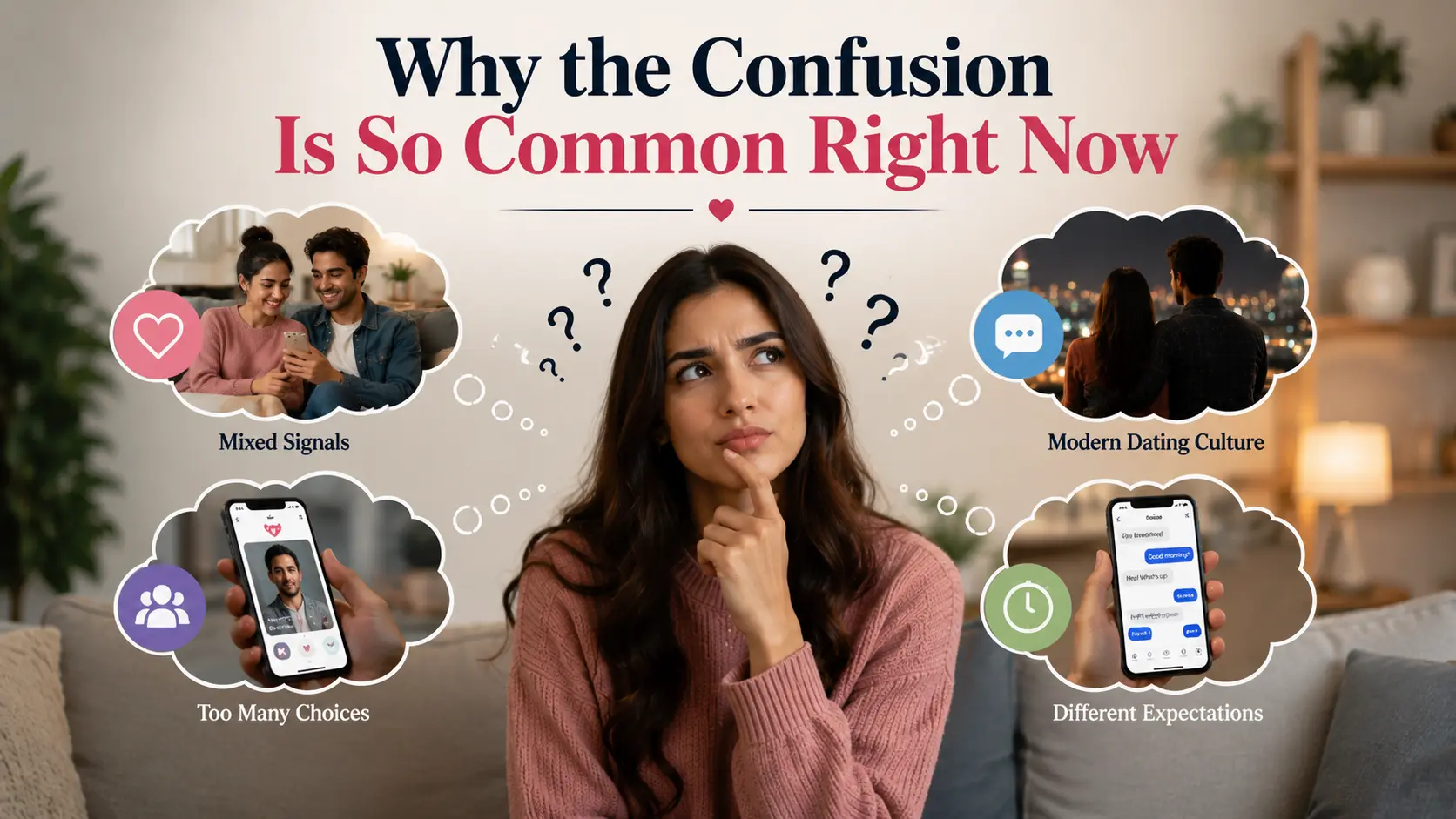
This isn’t just a matter of miscommunication between two specific people. It reflects a broader shift in how dating actually works today.
Research comparing college students’ relationship expectations in 2012 and 2022 found that while their underlying ideas about romantic relationships stayed largely the same, the paths they take through those relationships have changed considerably. Researchers identified a “flirtationship” stage — first sparks of attraction and flirtation, often happening online — as an early phase distinct from anything either dating or a relationship used to describe a decade ago.
Notably, students in both the 2012 and 2022 studies overwhelmingly expected exclusivity and monogamy once a relationship became genuinely committed — the expectation of exclusivity hasn’t disappeared. What’s changed is how long it takes people to get there and how many undefined stages now exist along the way.
National survey data from 2025 found that young adults report a median of three exclusive romantic dating partners over their lifetime, and more than half have had significant dating experience involving three or more exclusive relationships — which suggests most people do eventually move from dating into something clearly defined. The friction tends to happen in the space before that clarity arrives.
Despite marketing narratives suggesting hookup culture is the norm, a large majority of dating app users — around 85% in one 2025 industry report — say they’re actually seeking real, lasting partnerships, which reinforces that most people aren’t trying to stay in undefined territory forever. They’re often just unsure how or when to move out of it.
The Stages That Sit Between Dating and a Relationship

Part of what makes this question harder than it used to be is that “dating” and “relationship” aren’t the only two categories anymore. A handful of informal stages have emerged in between, and knowing where you actually stand requires understanding what each one typically means.
The talking stage. Early, exploratory conversation — usually over text or a dating app — before either person has committed to actual dates or exclusivity. Interest is clear, but nothing has been defined.
Casual dating. Going on dates, possibly with more than one person, without an agreement to be exclusive. Emotional investment can still be real here, but neither person has ruled out other connections.
Exclusive dating. Both people have implicitly or explicitly agreed to stop seeing other people, but haven’t necessarily used formal labels like “boyfriend” or “girlfriend” yet. This is often the most ambiguous stage because the behavior looks identical to a relationship while the label technically hasn’t caught up.
A situationship. A connection with real emotional and sometimes physical intimacy that deliberately avoids definition — often because one or both people are hesitant about commitment, labels, or the conversation itself.
An official relationship. Both people have explicitly agreed to exclusivity and typically use direct relationship language to describe each other and the connection.
Researchers studying these dynamics found that the stage involving the most disagreement between generations was the expectation around what typically comes after becoming “official” — older respondents were more likely to assume engagement naturally followed, while newer patterns show far more variation in what comes next.
What Actually Signals You’ve Moved From Dating Into a Relationship
A few concrete signals tend to mark the actual shift, beyond just spending more time together:
An explicit conversation has happened. Not implied, not assumed — an actual conversation where both people used words like “exclusive,” “official,” “boyfriend,” or “girlfriend,” or agreed clearly that they’re not seeing anyone else.
Both people describe the connection in the same way to others. If one person tells friends “we’re together” while the other says “we’re just seeing each other,” that mismatch is a clear sign the relationship hasn’t actually been defined yet, regardless of how it feels day to day.
Future planning becomes mutual, not one-sided. Dating often involves loosely discussing the future. A relationship typically involves both people actively planning around each other — trips, holidays, meeting family — with a shared assumption that the connection will still exist by then.
Jealousy and boundaries shift. In dating, it’s generally understood that either person could see other people unless stated otherwise. In a relationship, both people have typically agreed that seeing other people isn’t part of the arrangement anymore.
The relationship survives outside “date mode.” Dating often happens in curated settings — dinners, planned outings, best behavior. A relationship usually starts to include the less polished, everyday parts of life: arguments, errands, illness, boredom.
How to Actually Have the “Define the Relationship” Conversation
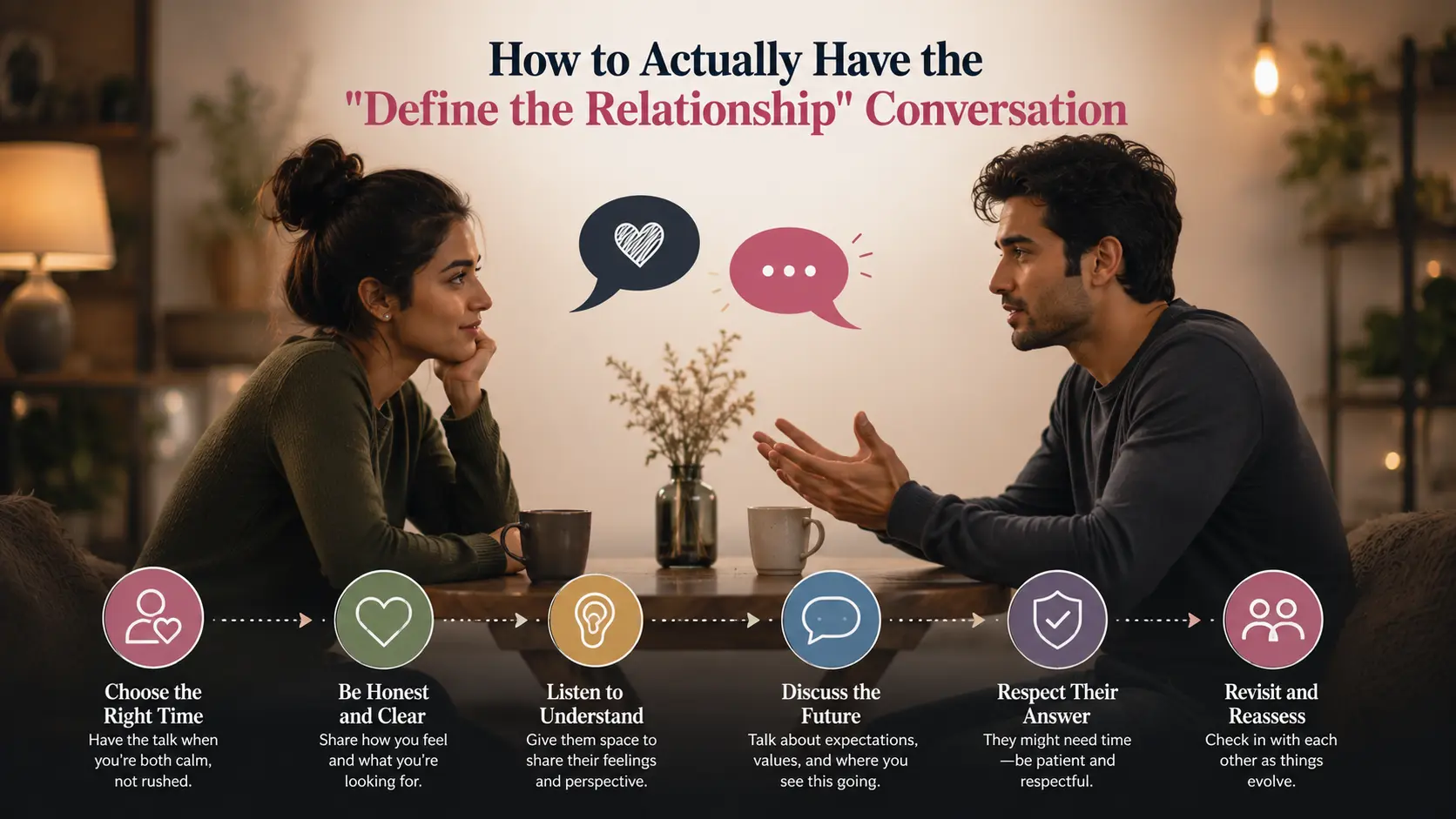
Most of the anxiety around this topic doesn’t come from not knowing the difference between dating and a relationship. It comes from not knowing how to bring up the conversation that would actually clarify it.
A few things that consistently make this easier:
Pick a calm, unhurried moment, not a high-stakes one. Bringing this up during an argument or right after an emotionally intense date makes it much harder for either person to answer honestly.
Frame it around clarity, not pressure. Something like “I’ve been really enjoying this and wanted to check in on where we both see it going” opens the door without forcing a specific answer.
Be honest about your own position first. It’s easier for someone to respond honestly when you’ve already shown some vulnerability yourself, rather than putting the entire burden of defining things on them.
Accept that the answer might not match your hope. Many young adults report lacking confidence in their dating skills and resilience around handling the natural ups and downs of relationships — part of building that resilience is being willing to hear an honest answer, even an uncomfortable one, rather than avoiding the conversation indefinitely to protect the ambiguity.
Don’t rely on indirect signals to answer this for you. Waiting for a title to arrive on its own through hints, jealousy, or vague behavior tends to draw the uncertainty out much longer than a direct conversation would.
How AI Search Tools Are Changing How People Learn About Relationship Terms
Terminology like “situationship,” “talking stage,” and “exclusive but not official” spreads fast through social media, but people increasingly turn to AI tools like ChatGPT, Perplexity, or Gemini to actually understand where they stand — describing their exact situation and asking directly rather than searching generic definitions.
A few things consistently help content like this earn a place in those AI-generated answers:
Precise, structured definitions outperform vague description. A model needs concrete distinctions to summarize confidently — dating versus exclusive dating versus a relationship — rather than a single blurry explanation covering all of them at once.
Layered nuance builds trust. Content that only defines the two end points, dating and relationship, without covering the stages in between, reads as incomplete to systems trained to prefer thorough, well-supported answers.
Specific research and data anchor the explanation. Concrete findings — how modern relationship trajectories have shifted, what exclusivity actually looks like today — give an AI model something solid to reference rather than generic reassurance.
Direct question phrasing matches how people actually ask. Queries like “are we dating or in a relationship” or “what does exclusive but not official mean” map closely onto FAQ-style content, which is exactly the format below.
Whether someone lands here through search or asks an AI tool directly, the goal stays the same: give a clear, well-supported answer to a question that gets more emotionally loaded than its simple wording suggests.
Frequently Asked Questions
The main difference is exclusivity and explicit agreement. Dating typically means getting to know someone, possibly while keeping other options open, without a formal commitment. A relationship means both people have explicitly agreed to be exclusive and generally use direct language to describe that commitment.
Yes, during casual dating this is generally understood as acceptable unless both people have specifically agreed otherwise. Once exclusivity has been discussed and agreed upon, continuing to see other people would typically be considered a boundary violation.
There’s no fixed timeline, and it varies significantly by couple. What matters more than duration is whether both people have had an explicit conversation about exclusivity and commitment, rather than simply assuming enough time has passed.
Casual dating generally involves an understanding that the connection could develop into something more defined over time. A situationship specifically involves ongoing emotional or physical intimacy where at least one person is intentionally avoiding defining or labeling the connection.
Look for an explicit conversation about exclusivity, both people describing the connection the same way to friends and family, mutual future planning, and a shared understanding that neither person is seeing anyone else. If these elements are missing, you’re likely still in the dating phase, regardless of how serious it feels.
Yes, it’s an extremely common source of relationship anxiety in modern dating, largely because of the number of informal, undefined stages that now exist between casual dating and an official relationship. Bringing up the conversation directly, rather than waiting for clarity to arrive on its own, tends to reduce that anxiety fastest.
A calm, low-pressure opener works best — something like checking in on how you’re both feeling about where things are headed, rather than demanding an immediate label. Being honest about your own feelings first tends to make it easier for the other person to respond honestly too.
A growing number of people describe their specific dating situation to an AI assistant and ask directly where it falls — dating, a situationship, or a relationship — rather than searching generic definitions. That’s shifted content toward clearer, stage-by-stage breakdowns, since that structure tends to produce the most complete and useful answer for these tools.
The Bottom Line
Dating and being in a relationship aren’t separated by how much time you spend together or how strong the connection feels — they’re separated by whether both people have explicitly agreed to exclusivity and defined what they are to each other. The ambiguity in between is common, understandable, and increasingly normal given how many informal stages modern dating has created, but it doesn’t have to last indefinitely.
If you’re stuck in that undefined space and unsure how to move forward, a direct conversation is almost always more effective than waiting for clarity to arrive on its own. And if that conversation feels harder than it should, talking it through with a relationship coach beforehand can make it a lot easier to actually have.